Thinking about adding an ADU or private suite in Cambrian? It can be a smart way to create more flexibility for your household today, but the real value often shows up later when you sell. Buyers tend to respond best to space that is legal, well-documented, and easy to understand, especially in a market where multigenerational living, home offices, and rental potential all matter. If you want your project to support resale, not complicate it, a few decisions up front can make a big difference. Let’s dive in.
Start With Jurisdiction First
In Cambrian, one of the first resale questions is not design. It is jurisdiction. While Cambrian is commonly known as a San Jose neighborhood, it includes both incorporated and unincorporated areas, so you need to confirm which rules apply to your parcel before you plan an ADU or suite.
San Jose’s current ADU universal checklist says the parcel must be in San Jose, the main home must be legally built, and there cannot be an active code-enforcement issue before plans are accepted. From a resale standpoint, this matters because buyers and their agents will want clear documentation that the space was built through the proper process.
If your starting point is unclear, the resale story gets weaker. A properly permitted project is easier to market, easier to explain, and often easier for a future buyer to finance and use with confidence.
Why Flexible Space Helps Resale
Today’s buyers often want more than just extra square footage. They want adaptable living space that can support changing needs over time. According to the California Department of Housing and Community Development, ADUs are commonly used for income potential, multigenerational living, and aging in place, while Freddie Mac also notes demand for ADUs and their potential to improve long-term property and resale value in the right context, as summarized in the state’s ADU handbook.
That lines up with broader buyer behavior. The same handbook cites NAR reporting that 17% of recent buyers purchased multigenerational homes, and NAR and NAHB reporting that 90% of younger groups want at least one home office or some dedicated work space.
For resale in Cambrian, that usually means the strongest use cases are:
- A private family suite
- A home office or guest space
- A fully permitted long-term rental unit
The common thread is flexibility. Buyers tend to see more value when the space can serve more than one practical purpose.
Know What You Are Actually Building
This is where many resale conversations get off track. A bedroom and bath addition, an interior suite, a JADU, and a full ADU are not the same thing. If the space is marketed one way but permitted another way, that can create confusion and reduce buyer confidence.
The state ADU handbook defines an ADU as a unit with independent living facilities for living, sleeping, eating, cooking, and sanitation. San Jose explains that a JADU is a smaller unit within the footprint of a single-family home through its ADU information page.
That means a suite can still be useful and appealing, but it may not carry the same resale story as a permitted ADU with independent function. If your goal is future value, you want buyers to understand exactly what they are getting, and you want the paperwork to support that description.
ADU vs JADU vs Suite
Here is a simple way to think about the difference:
Option | General Use | Key Resale Consideration |
|---|---|---|
ADU | Independent living unit | Strongest flexibility if fully permitted and clearly documented |
JADU | Smaller unit within existing home footprint | Useful, but different rules and utility setup may apply |
Interior suite | Extra bedroom or private living area | Can be appealing, but it is not the same as a separate dwelling unit |
When you plan the project, try to match the design to the long-term story you want to tell when you sell.
Local Rules Can Shape Future Value
San Jose has several ADU rules that can directly affect how buyers view the property later. The state handbook says completed ADU and JADU applications are generally due within 60 days, owner-occupancy requirements for ADUs are not allowed, side and rear setbacks are generally capped at four feet, and a certificate of occupancy is required before the unit can be occupied.
San Jose’s ADU FAQs add several practical points that matter for budgeting and resale expectations:
- ADUs under 750 square feet are exempt from school and parkland impact fees
- Property taxes increase based on the ADU’s value
- PG&E currently requires a separate meter for ADUs
- JADUs do not require separate meters
These details matter because buyers often ask about operating costs, approvals, and utility setup. A project that is well planned on paper tends to feel lower risk in the market.
Separate Sale Potential Is Now a Real Local Factor
One of the most interesting local resale developments is San Jose’s ADU condominium ordinance. The city adopted the ordinance in June 2024, effective July 18, 2024, allowing qualifying ADUs to be conveyed as condominiums through an approved parcel map, according to the city’s zoning ordinance update page.
That is important because separate sale potential is no longer just theoretical in San Jose. The city also announced in a local news release that it approved the first ADU condominium in California in August 2025.
For some homeowners, this may never be the goal. But if you think you might want that option later, it is worth discussing early. Design choices, survey work, and parcel-map timing can all affect whether that path is realistic.
Site Constraints Matter More Than You Think
Not every lot tells the same resale story. San Jose’s checklist asks owners to review site conditions before design work gets too far, including flood zones, geohazard or seismic hazards, historic status, wildland-urban interface exposure, easements, and nonbuildable areas such as former pool locations.
You can find those requirements in the city’s ADU universal checklist. For resale, this matters because site constraints can influence unit size, placement, cost, and how smoothly the permitting process goes.
San Jose also offers preapproved ADU plans, but site-specific projects must match the approved master plan. If you make changes, the project moves back into the regular permit process. That may be fine, but it is better to know that before you start budgeting and scheduling.
Questions to Ask Before You Build
If resale is part of your thinking, ask these questions early with your contractor and the city:
- Is the parcel actually in San Jose?
- Was the existing house legally built with final permits?
- Are there any open code-enforcement issues?
- Is this best treated as an ADU, JADU, or interior suite?
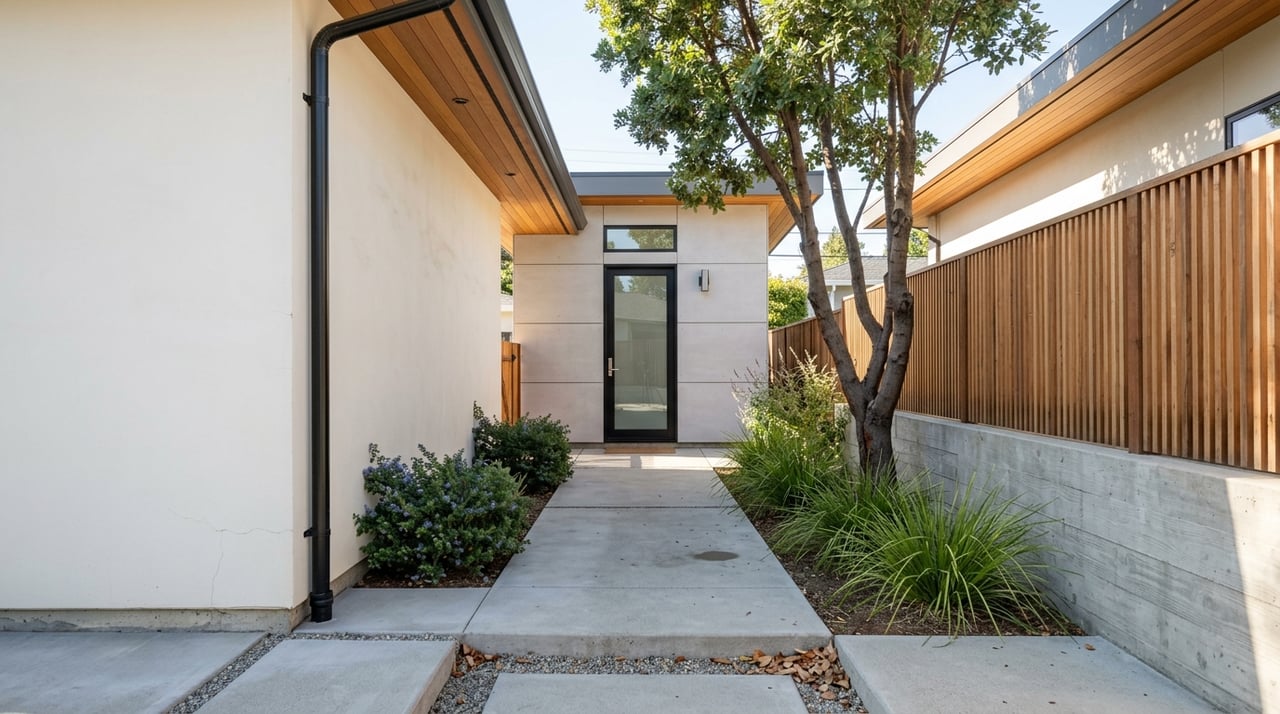
- Will the project be attached, detached, or a conversion of existing space?
- Which rules apply, and can you clearly follow either city or state standards without mixing them?
- Will impact fees or added property taxes affect the budget?
- If separate sale is a future goal, should the design account for condominium requirements from the start?
- If rental income is part of the plan, is the layout compatible with long-term rental use?
These are not just permit questions. They are resale questions too.
The Best Resale Story Is Clarity
In Cambrian, the strongest resale outcome usually comes from a legal, flexible, well-documented space that fits the lot and can be explained clearly to the next buyer. The more uncertainty there is around permits, use, or utility setup, the harder it can be to translate that investment into buyer confidence.
If you are weighing whether an ADU, JADU, or suite makes sense for your property, it helps to think beyond construction cost alone. You also want to think about how the finished space will be positioned, understood, and valued when it is time to sell.
If you want practical guidance on how ADU or suite decisions could affect your home’s future marketability in Cambrian, connect with The Samit Shah Team. We help you think through resale from the start so your improvements support both your lifestyle and your long-term real estate goals.
FAQs
What is the difference between an ADU and a suite in Cambrian?
- An ADU is a permitted unit with independent living facilities, including cooking and sanitation, while a suite may simply be extra living space and not a separate dwelling unit.
Why does jurisdiction matter for an ADU in Cambrian?
- Cambrian includes both incorporated and unincorporated areas, so you need to confirm whether your parcel is in San Jose before relying on San Jose ADU rules and checklists.
Can a San Jose ADU be sold separately from the main house?
- In some cases, yes. San Jose adopted an ordinance allowing qualifying ADUs to be conveyed as condominiums through an approved parcel map.
Do smaller ADUs in San Jose have lower fees?
- According to the city, ADUs under 750 square feet are exempt from school and parkland impact fees, though property taxes may still rise based on the ADU’s value.
What helps an ADU or suite add resale value in Cambrian?
- The strongest resale story usually comes from a legal, clearly permitted, flexible space that buyers can easily understand and use, such as a family suite, home office, or long-term rental unit.